
Many working professionals want a doctorate but cannot leave their jobs. So they ask the obvious question: how many years will this take? The honest answer is “it depends,” but that answer is not very helpful. This guide breaks down the real timeline, what slows students down, and how to plan before you apply to any of the PhD programs online.
How Long Does an Online PhD Usually Take?
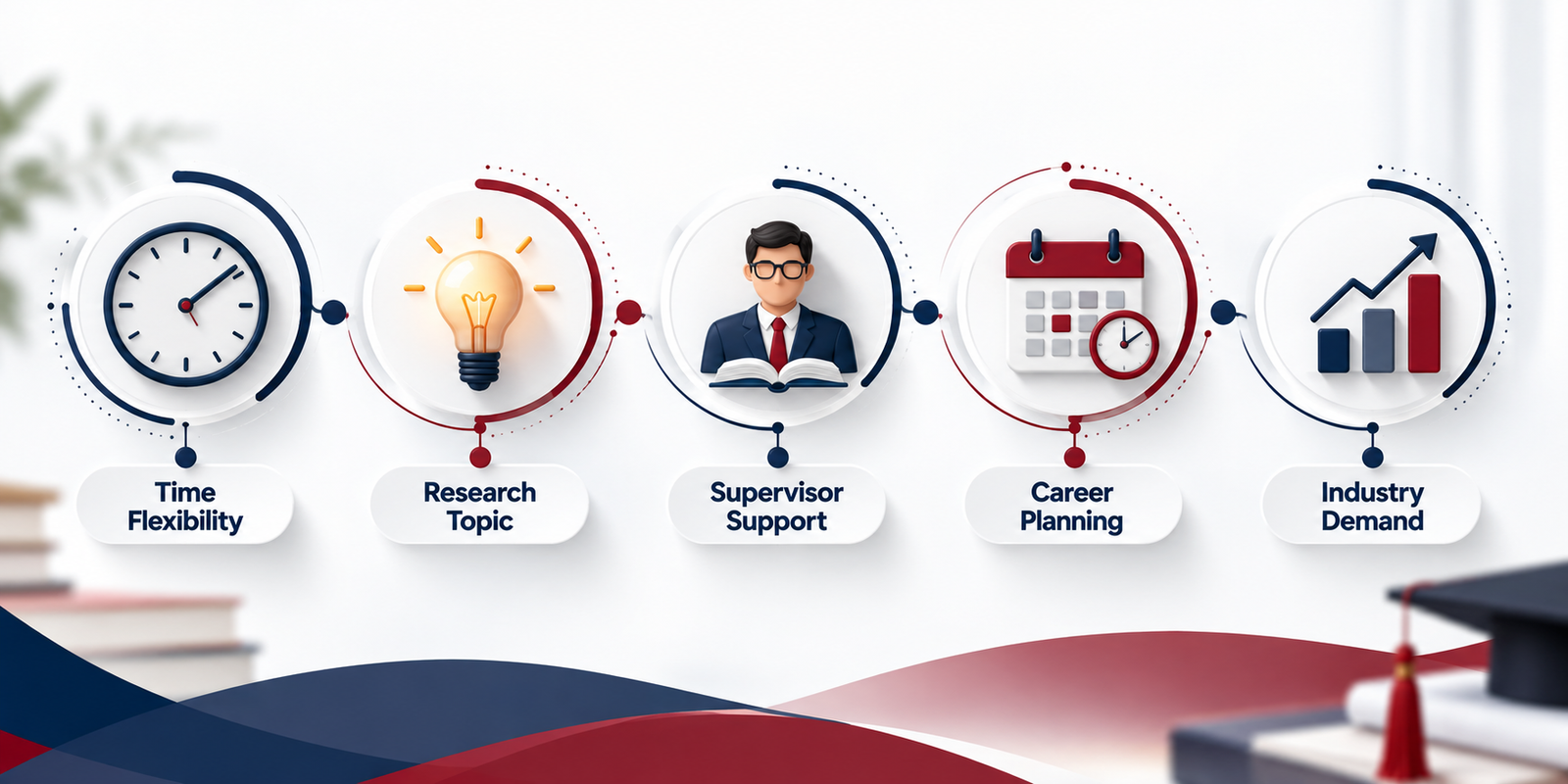
Most online PhD programs take three to six years to finish. Full-time students often complete in three to four years, while working professionals usually need five to six. The dissertation is the longest part, so your research topic, supervisor support, and weekly study hours decide the final timeline more than the course format does.
Think of it in two parts:
- Coursework and exams: usually 1 to 2 years
- Dissertation research and writing: usually 2 to 4 years
A few programs advertise a “fast” PhD in under two years. Be careful with these. Real research needs time, and a rushed degree may not be accepted by employers or universities.
Read also: What Are Postdoctoral Programs? A Complete Guide for PhD Graduates
What Are the Stages That Decide Your Timeline?
An online doctorate moves through fixed stages. Coursework, a qualifying exam, a research proposal, data collection, writing, and a final defense make up the usual path. Each stage has its own time cost, and the dissertation stage is where most delays happen.
- Coursework (1 to 2 years): Research methods, subject classes, and academic writing.
- Comprehensive or qualifying exam (a few months): Shows you are ready for independent research.
- Proposal approval (3 to 6 months): Your topic and method must be accepted by a committee.
- Research and data collection (1 to 2 years): Surveys, interviews, experiments, or document analysis.
- Writing and revisions (6 months to 1 year): Your supervisor will ask for several rounds of changes.
- Final defense: You present your work and answer questions, usually by video call.
A good example: a part-time student who spends two years on coursework, six months on the proposal, and two years on research and writing finishes in about four and a half years. A single stalled stage can add a full year.
Who Is Eligible to Apply?
Most universities ask for a master’s degree in a related field with a minimum percentage or GPA. Some also want a research proposal, work experience, or an entrance test. Rules differ by country and university, so always read the admission page carefully.
Common requirements include:
- A master’s degree from a recognized university
- A short research proposal or statement of purpose
- Academic references
- English language proof, if the program is taught in English
- Sometimes, two or more years of work experience
An important note for Indian students: UGC rules for PhD admission are strict, and a fully online PhD from an Indian institution may not be accepted. If you plan to use the degree for teaching or government work, check recognition first. Foreign degrees may also need an equivalence certificate.
Why Do Some Students Take Longer Than Planned?
Most delays come from planning problems, not intelligence. Students pick a topic that is too large, lose contact with their supervisor, or underestimate how much time research needs next to a full-time job. Knowing these traps early can save you a year or more.
The most common mistakes are
- Choosing a huge topic. A narrow, focused question is easier to finish.
- Ignoring supervisor fit. A supervisor who replies slowly can stall your work for months.
- Waiting too long to start writing. Write small sections as you go.
- Skipping the university’s data and ethics rules. Approval can take longer than expected.
- Studying without a weekly routine. Ten steady hours a week beats a burst of effort once a month.
- Not budgeting for extensions. Extra semesters usually mean extra fees.
What Jobs and Salary Can You Expect After an Online PhD?
A doctorate can open doors in teaching, research, and senior roles, but it does not guarantee a job or a fixed salary. Your results depend on your field, your university’s recognition, your publications, and your work experience. Think of it as a strong credential, not a shortcut.
Government and public sector options:
- University and college teaching, if the degree meets recognition rules
- Research positions in public institutes and laboratories
- Policy and advisory roles in education, health, or planning departments
Private sector options:
- Corporate research and analytics roles
- Training, learning, and development leadership
- Consulting and subject-expert positions
- Senior roles in education companies and ed-tech firms
On salary, there is no single honest number. A PhD can help you move into senior or specialist positions, but pay still depends on the industry, city, and your experience. Check real job listings in your field before you decide.
A doctorate can open doors to career opportunities after an online PhD, including teaching, research, and senior roles, but it does not guarantee a job or a fixed salary.
Who Should Choose It, and Who Should Avoid It?
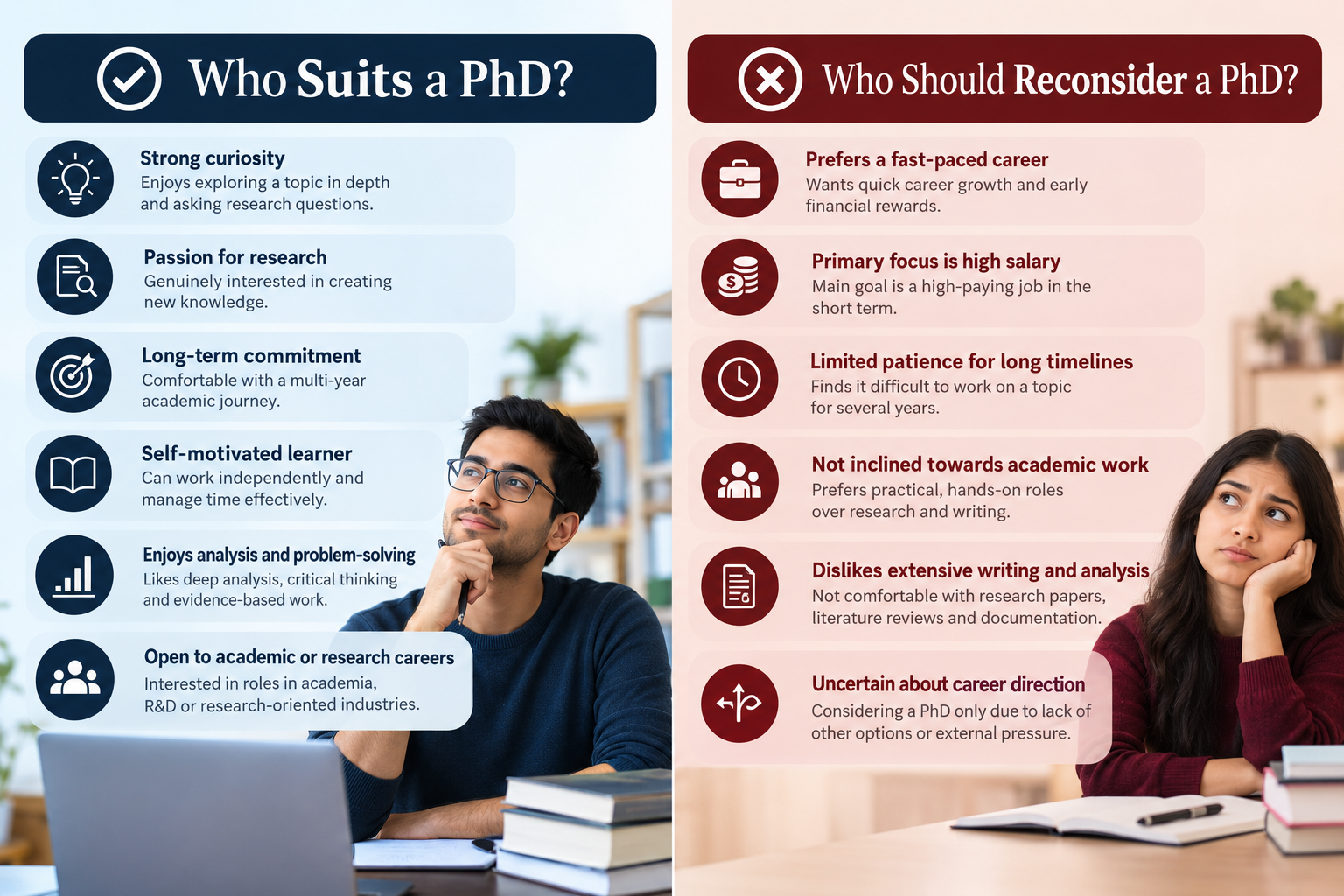
An online doctorate suits disciplined, self-driven people with a clear research interest. It does not suit anyone who wants a quick credential or needs constant classroom pressure to stay on track. Be honest about your habits and your reasons before you commit.
It may suit you if:
- You already work and cannot study full-time
- You have a research question you genuinely care about
- You can study alone for many hours every week
- You are comfortable with long writing and feedback cycles
You may want to avoid it if:
- You only want the “Dr.” title
- You expect to finish in two years
- You need in-person lab work for your subject
- You plan a university teaching career but have not checked recognition rules
How Can You Choose the Right Program?
Start with accreditation, then check the dissertation process, supervisor support, and total cost. A quality program explains its timeline clearly and shows how many students actually finish. Take your time here, because a poor choice can cost you years and a lot of money.
Use this checklist before you apply:
- Verify recognition. Confirm the university and degree are accepted in your country and for your career goal.
- Ask about completion rates. Honest institutions share this.
- Meet your possible supervisor. Ask how often you will get feedback.
- Read the full fee structure. Look for dissertation, extension, and examination charges.
- Check the residency rules. Some “online” programs still need short campus visits.
- Compare several options. A global education platform can help you view programs side by side, but always verify details on the university’s own website.
- Talk to current students or alumni. They will tell you what the brochure does not.
When you shortlist PhD programs online, ask each one for a sample timeline. If they cannot give you one, treat that as a warning sign.
Key Takeaways
- Most online doctorates with a dissertation take four to six years part-time.
- The dissertation stage causes most delays, not coursework.
- A narrow topic and a responsive supervisor save the most time.
- Recognition and accreditation matter more than the program’s marketing.
- A PhD improves your options but does not promise a job or salary.
- Study only if you have a real research interest and a steady weekly routine.
Conclusion
An online doctorate is a serious, long commitment. The timeline is manageable when you pick a focused topic, choose a supportive supervisor, and plan your weekly hours honestly. Before you apply, verify recognition and compare costs. If you want guidance while exploring options, counselors at ED Global Academy can help you ask the right questions. Make your decision slowly, and choose the program that fits your goals, not the one that promises the fastest finish.
FAQs
- How many years does an online PhD take?
Usually three to six years. Part-time students with a dissertation often need four to five years. - Can I finish an online PhD in two years?
It is very rare. Be careful with any program that promises this. Research and writing need real time. - How much does an online PhD cost?
Fees vary widely by country and university. Ask for the full cost, including dissertation and extension charges. - Is an online PhD harder than a regular one?
The academic standard is similar. The extra challenge is self-discipline, since you manage your own schedule. - Will I get a good job after an online PhD?
It can help for research, teaching, and senior roles, but jobs are never guaranteed. Your field and experience matter a lot.
