
Choosing the right postgraduate degree can shape the entire direction of your career, and for millions of students worldwide, MBA programs remain one of the most trusted paths to leadership roles, higher salaries, and global career mobility. Whether you’re a fresh graduate exploring options or a working professional aiming for a promotion, understanding how MBA programs work, what they offer, and where they can take you is essential before you invest your time and money.
In this guide, we’ll break down everything you need to know, from career benefits and specializations to admission requirements, costs, and future scope, so you can decide with confidence.

What Are MBA Programs?
MBA programs (Master of Business Administration) are postgraduate degrees designed to build advanced skills in management, leadership, finance, marketing, operations, and strategy. They combine theoretical business knowledge with practical, real-world case studies, group projects, and industry exposure.
Most MBA programs run for one to two years and are offered in several formats:
- Full-time MBA – ideal for those who can dedicate 1–2 years fully to studies
- Part-time MBA—suited for working professionals studying alongside their jobs
- Executive MBA (EMBA)—designed for senior professionals with significant work experience
- Online MBA – flexible, self-paced learning delivered through digital platforms
Why Pursue an MBA? Key Career Benefits
1. Higher Earning Potential
Graduates of MBA programs often see a significant jump in salary compared to those with only an undergraduate degree, especially in fields like consulting, finance, and technology management.
2. Leadership and Management Skills
MBA coursework is built around real business problems, helping students develop decision-making, negotiation, and team-leadership abilities that are directly applicable in the workplace.
3. Wider Career Opportunities
An MBA opens doors across industries; banking, healthcare, IT, retail, manufacturing, and startups all actively hire MBA graduates for managerial and strategic roles.
4. Strong Professional Network
Business schools bring together students, alumni, and faculty from diverse professional backgrounds, creating networking opportunities that can lead to partnerships, mentorships, and job referrals.
5. Global Mobility
Many MBA programs are recognized internationally, making it easier for graduates to pursue roles or further studies abroad.
6. Entrepreneurial Skills
For aspiring business owners, an MBA provides the foundational knowledge of finance, marketing, and operations needed to start and scale a business successfully.
Popular MBA Specializations
Choosing the right specialization can determine your career trajectory. Some of the most in-demand options include
| Specialization | Best Suited For |
| Finance | Banking, investment, corporate finance roles |
| Marketing | Brand management, digital marketing, sales |
| Human Resources | HR management, talent acquisition, org development |
| Operations Management | Supply chain, logistics, manufacturing |
| International Business | Global trade, export-import, multinational firms |
| Business Analytics | Data-driven decision-making, consulting |
| Entrepreneurship | Startups, business development |
Scope of MBA Programs in Today’s Job Market
The demand for MBA graduates continues to grow as businesses look for professionals who can manage teams, analyze data, and drive strategic decisions. Some of the top career paths after an MBA include:
- Business Consultant
- Financial Analyst / Manager
- Marketing Manager
- Human Resources Manager
- Operations Manager
- Product Manager
- Business Development Manager
- Entrepreneur / Startup Founder
With businesses increasingly going digital, professionals who combine an MBA with skills in analytics, digital marketing, or technology management often have a competitive edge in the job market.
How to Choose the Right MBA Program
Before enrolling, consider the following factors:
- Accreditation – Ensure the institution and program are recognized by relevant education authorities.
- Specialization Options – Pick a program aligned with your career goals.
- Format Flexibility – Decide between full-time, part-time, executive, or online study modes.
- Faculty and Curriculum – Look for updated, industry-relevant coursework.
- Placement Support – Strong placement cells and industry tie-ups can significantly impact post-MBA outcomes.
- Cost and ROI – Compare tuition fees against expected salary growth and career benefits.
For students looking for guidance on choosing the right course or institution, platforms like ED Global Academy, a global education platform, help learners compare programs, understand eligibility requirements, and make informed academic decisions.
Eligibility and Admission Process
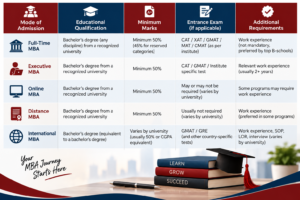
While requirements vary by institution, most MBA programs generally require:
- A bachelor’s degree in any discipline
- Minimum qualifying marks (varies by school)
- Entrance exam scores (such as GMAT, GRE, CAT, or equivalent)
- Relevant work experience (mandatory for some Executive MBA programs)
- Statement of purpose, letters of recommendation, and personal interviews
Cost of MBA Programs
MBA tuition fees can vary widely depending on the country, institution ranking, and program format, ranging from moderately priced regional programs to premium global business schools. It’s important to also factor in additional costs such as study materials, accommodation, and lost income during full-time study when calculating the total investment.
Is an MBA Worth It?
For many professionals, the answer is yes provided the program aligns with clear career goals. An MBA is most valuable when:
- You’re aiming for leadership or managerial roles
- You want to switch industries or career paths
- You’re planning to start your own business
- Your current role requires stronger strategic or financial skills
However, an MBA isn’t the only path to career growth. Professional certifications, specialized diplomas, or on-the-job experience may be equally effective depending on your goals and industry.
Conclusion
MBA programs continue to be a powerful tool for career advancement, offering higher earning potential, leadership skills, and access to diverse industries worldwide. The key is choosing a program that matches your career goals, budget, and preferred learning format. Researching accreditation, faculty, specializations, and placement support with help from resources like ED Global Academy can make your decision-making process much easier.
If you’re ready to take the next step, start by shortlisting programs that align with your career vision and compare their curriculum, cost, and outcomes before applying.
Frequently Asked Questions (FAQs)
What is the duration of most MBA programs?
Most full-time MBA programs run for one to two years, while part-time and executive formats may take longer depending on the schedule.
Can I pursue an MBA without work experience?
Yes, many full-time MBA programs accept fresh graduates, though certain executive MBA programs require prior work experience.
Is an online MBA as valuable as a full-time MBA?
An online MBA can offer similar knowledge and skills, but recognition and value may depend on the accreditation and reputation of the issuing institution.
Which MBA specialization has the best career scope?
Finance, marketing, and business analytics are among the most in-demand specializations, though the “best” choice depends on your career goals and industry interest.
Do I need to clear an entrance exam for MBA admission?
Most reputed MBA programs require entrance exam scores such as GMAT, GRE, or CAT, though requirements vary by institution and country.
