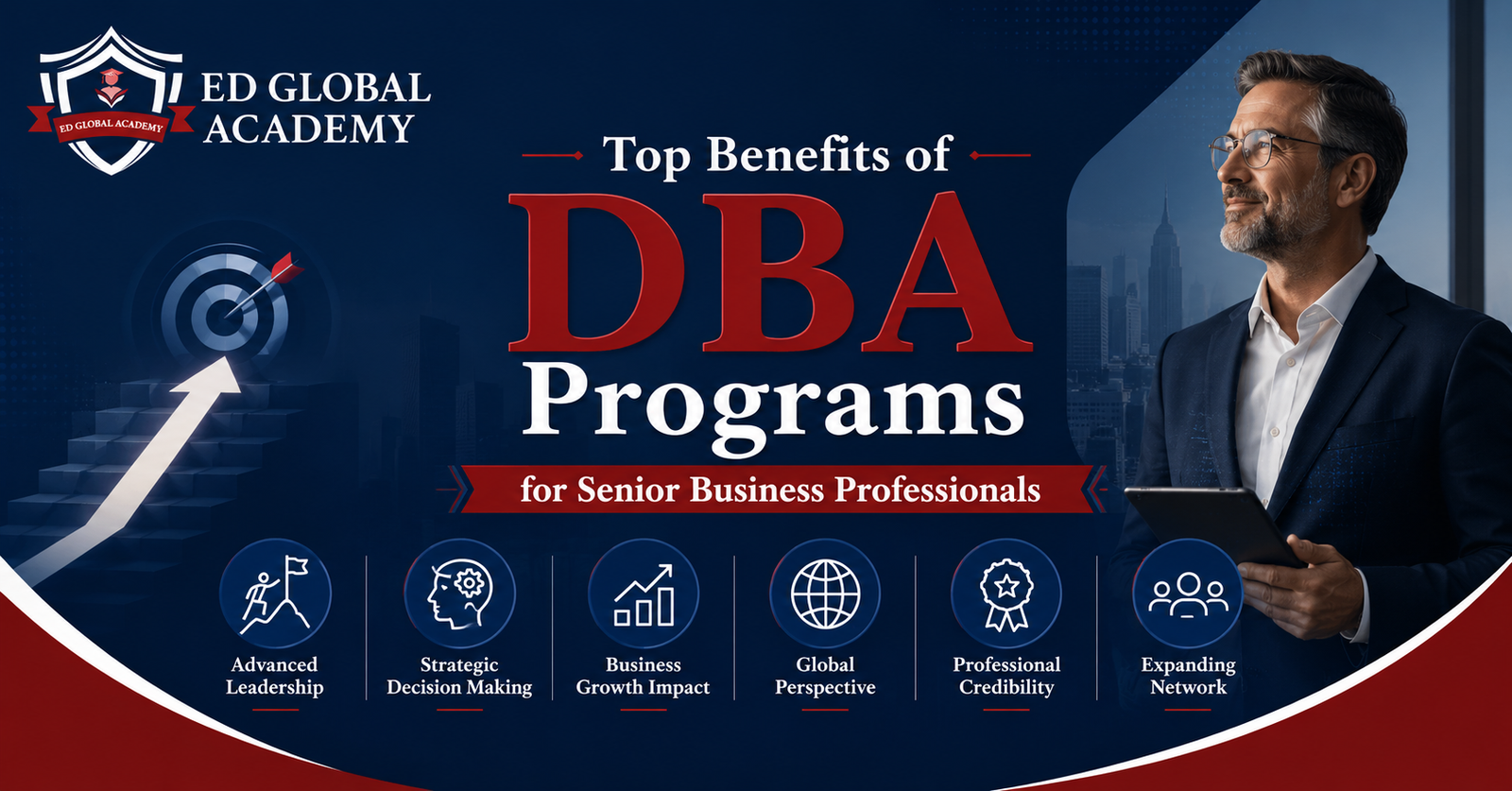
For senior business professionals who have already climbed a significant portion of the corporate ladder, the next step in their career often calls for something more than another certification or short course. This is where DBA Programs come in. A doctor of business administration is a terminal degree designed specifically for experienced executives, managers, and consultants who want to combine advanced academic research with real-world business practices.
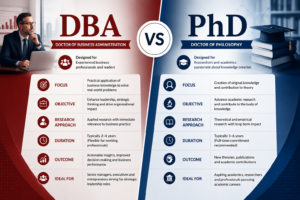
Unlike a traditional PhD, which leans heavily toward theoretical research, DBA programs are built around solving practical, high-level business problems. They help professionals sharpen their strategic thinking, build credibility as thought leaders, and open doors to executive-level and academic opportunities. In this blog, we’ll explore the top benefits of pursuing a DBA, who it’s best suited for, and what to look for when choosing the right program.

What Is a DBA Program?
A Doctor of Business Administration (DBA) is a doctoral-level degree focused on applied business research. It is designed for working professionals who already hold significant industry experience and often an MBA or equivalent master’s degree.
Key characteristics of DBA programs include
- A focus on solving real organizational and industry challenges
- Flexible formats suited for working executives (part-time, online, or hybrid)
- A dissertation or capstone project based on practical business research
- Advanced coursework in leadership, strategy, and organizational management
Top Benefits of DBA Programs for Senior Business Professionals
1. Advanced Strategic and Analytical Thinking
Senior professionals are often responsible for high-stakes decisions that affect entire organizations. DBA programs sharpen the ability to analyze complex business problems using research-based methodologies, helping leaders make more informed, data-driven decisions.
2. Enhanced Credibility and Authority
Holding a doctorate signals deep expertise. For consultants, senior executives, and business owners, this credibility can strengthen client trust, support thought leadership positioning, and enhance professional reputation in competitive industries.
3. Career Advancement Opportunities
Many senior professionals pursue DBA programs to qualify for C-suite roles, board positions, or academic teaching opportunities. The degree demonstrates commitment, discipline, and the ability to lead at the highest strategic level.
4. Practical, Real-World Research
Unlike traditional academic doctorates, a DBA emphasizes applied research. Professionals often choose a dissertation topic directly related to their organization or industry, allowing them to solve real problems while earning their degree.
5. Expanded Professional Network
DBA cohorts typically consist of experienced professionals from diverse industries. This creates valuable opportunities for networking, collaboration, and even future business partnerships.
6. Flexibility for Working Executives
Most DBA programs are designed with working professionals in mind. Online, part-time, and executive formats allow senior professionals to continue working full-time while completing their doctoral studies.
7. Bridge Between Academia and Industry
A DBA allows professionals to transition into consulting, executive education, or university teaching roles later in their careers, opening a second career path built on their decades of industry experience.
8. Long-Term Return on Investment
While a DBA requires a significant investment of time and resources, it often leads to higher earning potential, leadership promotions, and long-term career security, especially for professionals in consulting, finance, and executive management.
Who Should Consider a DBA Program?
A DBA is best suited for:
- Senior managers and executives seeking strategic leadership growth
- Consultants who want stronger research and analytical credentials
- Entrepreneurs and business owners aiming to scale using data-backed strategies
- Professionals interested in transitioning into academia or executive education
How to Choose the Right DBA Program
When evaluating DBA programs, consider the following:
| Factor | Why It Matters |
| Accreditation | Ensures academic quality and global recognition |
| Program Format | Online, hybrid, or in-person should match your schedule |
| Research Focus Areas | Should align with your industry or career goals |
| Faculty Expertise | Experienced mentors improve research quality |
| Alumni Network | Strong networks lead to better career opportunities |
| Global Recognition | Important for professionals working internationally |
Professionals researching options often compare universities and platforms that specialize in executive doctoral education. For example, ED Global Academy, a global education platform, is known for connecting senior professionals with accredited institutions offering flexible, research-driven doctoral programs tailored to working executives.
Conclusion
For senior business professionals ready to take the next step in their careers, DBA programs offer a powerful combination of advanced strategic knowledge, practical research experience, and enhanced professional credibility. Whether the goal is a C-suite promotion, a consulting practice, or a transition into academia, a DBA can provide the tools and network needed to succeed.
If you’re exploring accredited, flexible doctoral options tailored to working executives, researching platforms like ED Global Academy can be a helpful starting point. Ready to take your career to the next level? Start comparing DBA programs today and find the one that aligns with your professional goals.
Frequently Asked Questions (FAQs)
What is the difference between a DBA and a PhD in business?
A DBA focuses on applied, practical research for working professionals, while a PhD emphasizes theoretical research typically aimed at academic careers.
How long does it take to complete a DBA program?
Most DBA programs take three to five years, depending on the format and the professional’s pace of study.
Do I need an MBA before enrolling in a DBA program?
Many programs prefer or require a master’s degree, often an MBA, along with relevant professional experience.
Can I complete a DBA while working full-time?
Yes. Most DBA programs are designed for working professionals and offer part-time, online, or executive formats.
Is a DBA worth it for senior executives?
For many senior professionals, a DBA enhances credibility, strategic skills, and career mobility, making it a valuable long-term investment.
