
Choosing among the many MBA programs available in the United States is one of the most important decisions in a professional’s career journey. With rising tuition costs, competitive admissions, and a fast-changing job market, prospective students need clear, reliable information before committing two years and a significant financial investment to a business degree.
This guide breaks down the top MBA programs in the USA, what they cost, the real benefits they offer, and the career opportunities that follow graduation. Whether you’re comparing full-time, part-time, or executive tracks, this article will help you understand what to expect and how to choose the right fit for your goals.
Why Pursue an MBA in the USA?
The United States is home to some of the most respected business schools in the world. American MBA programs are known for:
- Strong alumni networks spanning global industries
- Access to top recruiters across finance, consulting, tech, and healthcare
- Rigorous, case-based, and experiential learning methods
- Opportunities for internships and practical projects with leading companies
- Flexible formats, including full-time, part-time, online, and executive MBA options
For many students, an MBA is not just a credential; it’s a career accelerator that opens doors to leadership roles, higher salaries, and new industries.

Top MBA Programs in USA
While rankings shift slightly year to year, a consistent group of schools remains at the top of most lists for academic rigor, employer reputation, and alumni outcomes:
- Harvard Business School – Known for its case-method teaching and unmatched alumni network.
- Stanford Graduate School of Business – Strong ties to Silicon Valley and entrepreneurship.
- Wharton School (University of Pennsylvania) A leader in finance and analytics-driven curricula.
- MIT Sloan School of Management – Focused on innovation, technology, and data-driven decision-making.
- Booth School of Business (University of Chicago) – Renowned for flexibility and quantitative rigor.
- Columbia Business School – Located in New York City, with strong finance and media industry connections.
- Kellogg School of Management (Northwestern) – Known for marketing and team-based leadership training.
- Haas School of Business (UC Berkeley) – Strong focus on innovation and sustainable business practices.
These MBA programs consistently attract applicants seeking top-tier faculty, global recognition, and strong post-graduation placement rates.
Cost of MBA Programs in the USA
Tuition varies significantly depending on the school, format, and duration. Here’s a general breakdown:
| Program Type | Estimated Total Cost (USD) | Duration |
| Full-Time MBA (Top-Tier) | $150,000 – $220,000 | 2 years |
| Part-Time MBA | $60,000 – $120,000 | 2–3 years |
| Executive MBA (EMBA) | $100,000 – $200,000 | 18–24 months |
| Online MBA | $40,000 – $100,000 | 1–2 years |
These figures typically include tuition, fees, and estimated living expenses but exclude opportunity costs such as lost income during full-time study. Many schools offer scholarships, assistantships, and employer-sponsorship options that can significantly reduce out-of-pocket costs.
Key Benefits of an MBA Program
An MBA offers more than just classroom learning. Some of the core benefits include:
- Career advancement – Many graduates move into managerial or executive-track roles.
- Salary growth – Graduates from top MBA programs often see substantial salary increases post-graduation.
- Networking – Access to a global alumni base, industry events, and recruiter relationships.
- Skill development – Strengthened abilities in leadership, strategy, finance, and communication.
- Career switching – A practical path for professionals looking to pivot into a new industry or function.
For international students, many MBA programs also offer optional practical training (OPT) opportunities, allowing graduates to gain U.S. work experience after finishing their degree.
Career Opportunities After an MBA
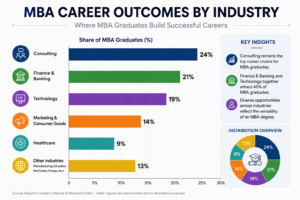
Graduates from top MBA programs enter a wide range of industries and functions, including:
Consulting
Roles at firms specializing in strategy, operations, and management consulting.
Finance and Investment Banking
Positions in corporate finance, private equity, venture capital, and investment banking.
Technology and Product Management
Careers in product strategy, operations, and general management at tech companies.
Marketing and Brand Management
Roles focused on consumer insights, brand strategy, and go-to-market planning.
Entrepreneurship
Many MBA graduates use their training and network to launch their own ventures.
Healthcare and Nonprofit Management
Growing demand for MBA-trained leaders in healthcare administration and mission-driven organizations.
How to Choose the Right MBA Program
When comparing MBA programs, consider:
- Your career goals – Does the school have strong placement in your target industry?
- Program format Full-time, part-time, online, or executive which fits your schedule?
- Cost and financial aid – Compare total cost against expected ROI and available scholarships.
- Location – Proximity to industry hubs can affect networking and internship access.
- Class profile and culture – Look at class size, diversity, and teaching style to find the right fit.
Working with an education counselor or a trusted platform like ED Global Academy can help simplify this research by matching your profile and goals with the right business schools, application timelines, and preparation resources.
Conclusion
Choosing among the top MBA programs in the USA requires balancing cost, career goals, and personal circumstances. A Global education platform can help you compare universities, tuition fees, specializations, and career opportunities more effectively. While tuition can be a significant investment, the long-term benefits stronger networks, higher earning potential, and expanded career opportunities make an MBA a valuable step for many professionals.
Take time to research each program’s strengths, talk to alumni, and align your choice with your career vision. With the right preparation and guidance, an MBA can be a powerful catalyst for long-term professional growth.
Frequently Asked Questions
What is the average cost of MBA programs in the USA?
Costs generally range from $40,000 for online programs to over $200,000 for top-tier full-time and executive MBA programs, including tuition and living expenses.
How long does it take to complete an MBA?
Most full-time programs take two years, while part-time and online options can take one to three years depending on course load.
Do I need work experience to apply for an MBA?
Most full-time MBA programs prefer 2–5 years of work experience, though some direct-entry programs accept recent graduates.
Are online MBA programs as valuable as full-time programs?
Accredited online MBA programs can offer strong value, especially for working professionals, though networking opportunities may differ from full-time, on-campus programs.
What GMAT or GRE score do I need for top MBA programs?
Top-tier programs typically look for competitive GMAT scores (often 700+) or equivalent GRE scores, though holistic admissions also weigh essays, experience, and recommendations.
