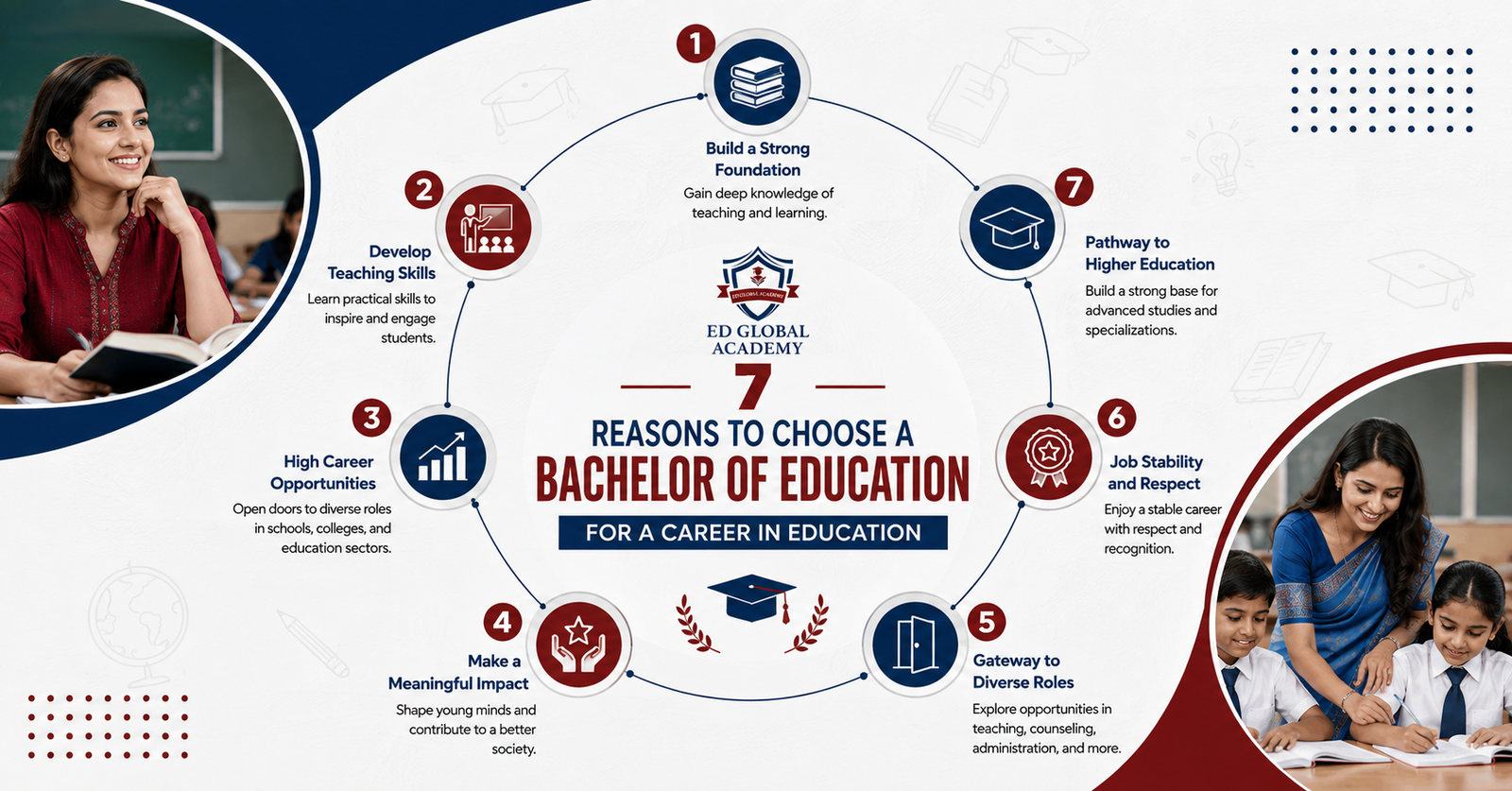
Choosing the right degree can shape the entire direction of your career, and for anyone drawn to teaching, mentoring, or shaping young minds, a Bachelor of Education is one of the most practical paths forward. This degree doesn’t just teach you subject content; it trains you in classroom management, child psychology, curriculum design, and the real-world skills that make a great educator.
If you’re weighing your options for a career in education, this article breaks down seven compelling reasons why a Bachelor of Education could be the right fit for you, along with what to expect from the program and how to get started.

It’s the standard entry point into teaching.
In most countries, a Bachelor of Education (B.Ed.) is either required or strongly preferred for anyone who wants to teach in public or private schools. Unlike a general degree, it’s specifically designed to meet the licensing and certification requirements set by education boards.
- Meets eligibility criteria for teacher certification exams
- Recognized by schools, school boards, and education ministries
- Often a prerequisite for government teaching jobs
Choosing this path from the start saves you from having to complete additional certification programs later.
Strong and Stable Job Demand
Education is one of the few sectors that consistently needs new talent, year after year. Schools, colleges, tutoring centers, and online learning platforms all require qualified teachers.
- Steady demand across public and private schools
- Opportunities in urban and rural areas alike
- Growing demand for teachers in special education, STEM, and early childhood education
This stability makes a Bachelor of Education a low-risk, high-reward academic investment.
Diverse Career Paths Beyond the Classroom
A common misconception is that a B.Ed only leads to a classroom teaching job. In reality, the degree opens doors to a wide range of roles across the education ecosystem.
| Career Path | Description |
| Classroom Teacher | Teach specific subjects at primary, middle, or secondary level |
| Curriculum Designer | Develop lesson plans and academic content |
| School Counselor | Support student wellbeing and academic guidance |
| Education Administrator | Manage school operations and policy |
| Instructional Coach | Train and mentor other teachers |
| Content Creator for a global education platform | Design courses and learning materials for online learners worldwide |
This flexibility means you’re not locked into a single role for your entire career.
Hands-On, Practical Training
Unlike purely theoretical degrees, a Bachelor of Education places heavy emphasis on practical experience. Most programs include supervised teaching practice, classroom internships, and real student interaction.
- Practice teaching under experienced mentors
- Learn to manage diverse classrooms and learning styles
- Build confidence before entering a full-time teaching role
This practical exposure means graduates are job-ready from day one, rather than learning everything on the job.
Personal Growth and Meaningful Impact
Teaching is one of the few careers where your daily work directly shapes another person’s future. A bachelor of education trains you not just in subject knowledge but in communication, empathy, patience, and leadership.
- Develop strong public speaking and communication skills
- Learn to manage groups and resolve conflicts constructively
- Experience the long-term satisfaction of watching students grow
Many educators describe this sense of purpose as one of the most rewarding parts of the profession.
Opportunities for Specialization
A Bachelor of Education isn’t a one-size-fits-all degree. Most programs allow you to specialize based on your interests and career goals.
- Early childhood education
- Special education and inclusive learning
- Secondary-level subject specialization (Math, Science, Languages, etc.)
- Educational technology and digital learning
Specializing early can help you stand out in a competitive job market and target roles that genuinely interest you.
A Foundation for Further Academic Growth
A Bachelor of Education also serves as a stepping stone for advanced qualifications. Many graduates go on to pursue a master’s in education, educational leadership programs, or specialized certifications in areas like counseling or administration.
- Pathway to higher academic and leadership roles
- Opens doors to research and policy-making positions
- Valuable for those aiming to work with institutions or a global education platform focused on teacher training and curriculum development
This makes it a long-term investment rather than a single-career decision.
Conclusion
A Bachelor of Education offers far more than a pathway into the classroom; it provides stability, purpose, flexibility, and room to grow into diverse roles across the education sector. Whether your goal is to teach, design curriculum, or eventually contribute to a global education platform, this program lays a strong and practical foundation. Ed Global Academy can help learners explore educational opportunities and take the next step toward building their professional future.
If you’re ready to take the next step, explore accredited bachelor of education programs and start building a career that shapes the future one student at a time. With Ed Global Academy, you can explore suitable learning pathways and make an informed decision about your education and career goals.
Frequently Asked Questions
What is a Bachelor of Education degree?
A Bachelor of Education (B.Ed.) is an undergraduate or professional degree that trains individuals to become certified teachers, covering subjects like pedagogy, classroom management, and curriculum design.
How long does it take to complete a Bachelor of Education?
Most programs take between one and four years, depending on the country and whether it’s a standalone degree or combined with another undergraduate program.
Do I need a bachelor of education to teach?
In most regions, yes, it’s typically required or strongly preferred for teaching in accredited schools, especially public institutions.
Can I specialize in a subject during a bachelor of education?
Yes, most programs offer subject-specific tracks such as science, mathematics, languages, or special education.
What jobs can I get with a Bachelor of Education besides teaching?
Graduates can work as curriculum designers, school counselors, education administrators, instructional coaches, or content developers for online and global education platforms.
