
You already manage teams, budgets, or projects. You have handled tough deadlines, difficult clients, and decisions that did not come with a clear answer. So when someone suggests a doctorate, it is natural to pause and ask: will this really make me a better leader, or will it only add a title to my name?
That question matters more today than ever. Many professionals reach a point where experience alone stops opening new doors. Roles at the top ask for sharper strategy, stronger evidence behind decisions, and the ability to guide people through constant change. An online DBA for executives is built for exactly this stage of a career.
But a DBA is also a big commitment. It takes years of study, regular research work, and a serious investment of money and time. Choosing it for the wrong reasons can leave you tired and disappointed, while choosing it for the right reasons can change how you lead.
What Is a Doctor of Business Administration?
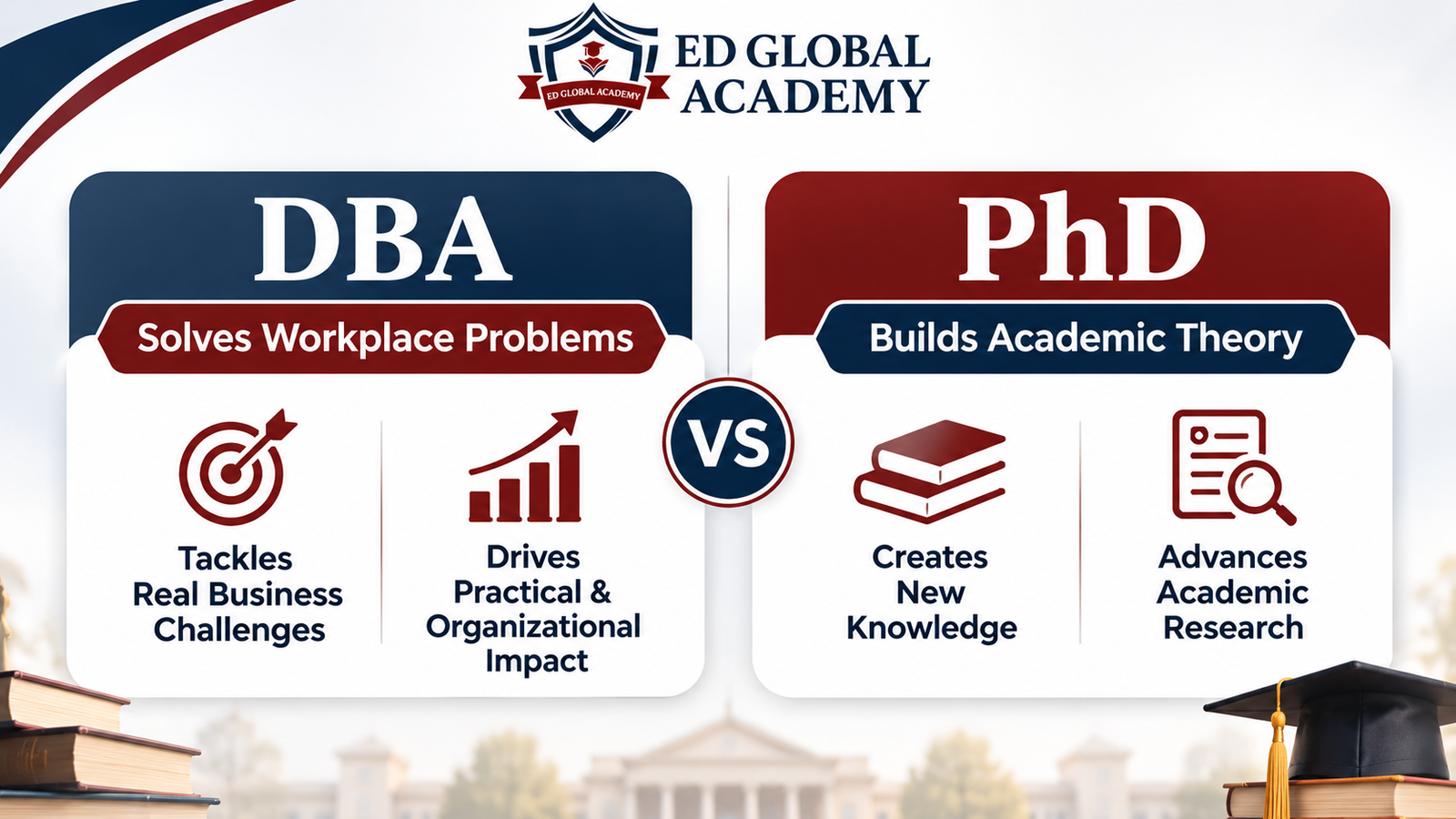
A Doctor of Business Administration (DBA) is a professional doctorate for working managers and leaders. It trains you to apply research to real business problems. A PhD focuses on building new theory for academia, while a DBA focuses on solving practical problems inside organizations. Most students are experienced professionals.
Think of it this way. A PhD student may ask why companies fail in general. A DBA student asks why their own company is losing customers and what to change.
Typical subjects include:
- Research methods
- Strategic management
- Leadership and organizational behavior
- Data analysis
- An applied dissertation
What Are the Top 8 Leadership Benefits of a DBA?
A DBA can sharpen strategic thinking, improve decision-making, build research credibility, widen your professional network, and open senior and advisory roles. It also strengthens your ability to guide change and mentor others. Results depend on your effort and experience, so treat these as possibilities, not promises.
1. Sharper strategic thinking
You learn to view one problem through market, people, and finance lenses together. Leaders who do this spot risks earlier.
2. Evidence-based decisions
Research training teaches you to test assumptions and read data before acting. Your decisions become easier to explain and defend.
3. Stronger credibility
A doctorate and a research project can earn trust from boards, clients, and investors. Still, lasting credibility comes from results, not the title.
4. Practical problem-solving
Many programs let you study a real issue from your own workplace. You solve a business problem while earning the degree.
5. Confidence in leading change
You study why people resist change and which models work. This helps during mergers, new systems, or restructuring.
6. A senior peer network
Classmates are usually experienced managers, and supervisors are active researchers. These relationships often lead to advice, partnerships, and referrals.
7. Ability to mentor and teach
Research and writing skills help you coach teams, run workshops, or take guest lectures and adjunct roles.
8. Career flexibility
A DBA keeps doors open to consulting, advisory boards, and senior roles, even if you change industries later.
Who Can Apply? Eligibility and Duration
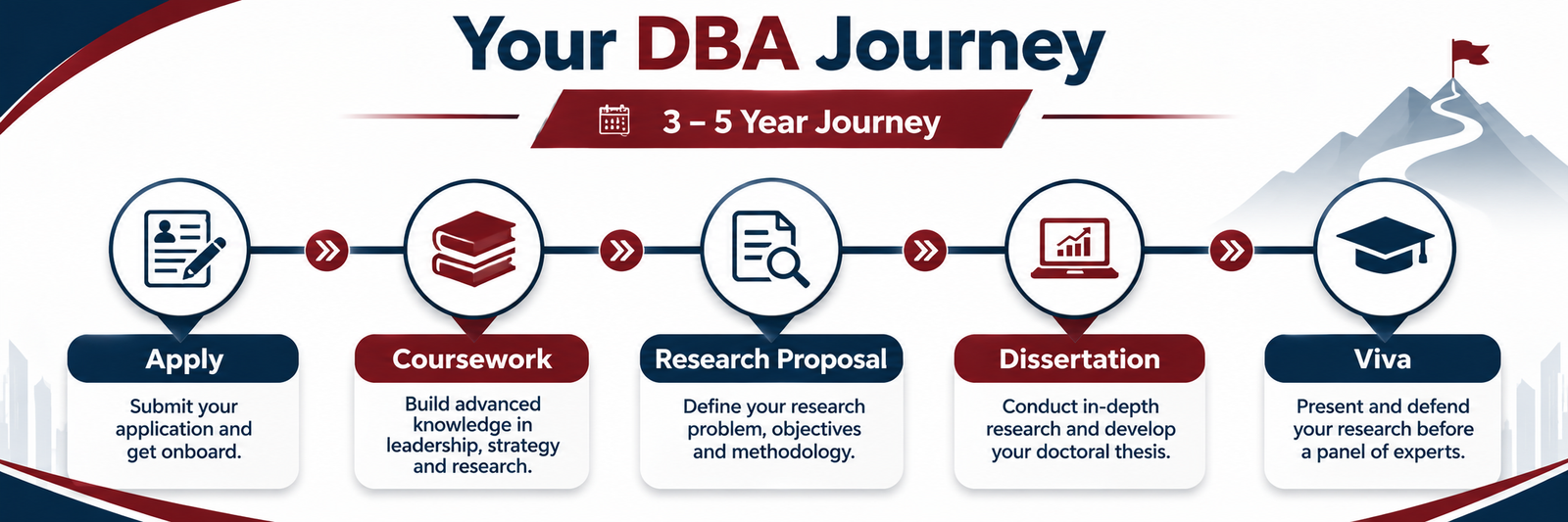
Most DBA programs ask for a master’s degree, often an MBA, and several years of managerial experience. Many also want a research proposal and an interview. The program usually takes three to five years, depending on whether you study full-time or part-time. Rules differ by university, so always check the official admission page.
Documents you usually need:
- Master’s degree certificate
- Updated CV showing work experience
- Research proposal or statement of purpose
- Recommendation letters
Simple steps to apply:
- Shortlist universities with proper accreditation.
- Confirm recognition. In India, check UGC-DEB approval for online degrees and AIU equivalence for foreign degrees.
- Write a clear research proposal on a real business problem.
- Prepare for the interview.
What Careers, Salary, and Future Scope Come with a DBA?
A DBA can support moves into senior management, consulting, corporate training, and teaching. Salary depends on your country, industry, experience, and employer, so no degree guarantees a fixed income. Check pay data from official pay scales, company reports, and trusted job portals before you decide.
- Private sector: Strategy heads, directors, consultants, and learning leaders value applied research skills.
- Government and public sector: Policy advisory, public sector units, training institutes, and research bodies may suit you. Many government posts follow fixed recruitment rules, so confirm whether a DBA is accepted before applying.
- Teaching: Many universities prefer a PhD for permanent faculty posts. A DBA often fits professor of practice or adjunct roles.
- Higher studies: Some graduates pursue post-doctoral research or fellowships.
- Future scope: Organizations need leaders who can handle data, change, and ethical decisions. A DBA supports that, but your experience matters most.
Is an Online DBA for Executives Worth It for Working Professionals?
It can be if you need flexibility and can commit to steady weekly study time. Online formats let you continue working while you research. Worth depends on recognition, supervision quality, and your goals, so verify accreditation and ask about live supervisor access before paying any fee.
Questions to ask every university:
- Who supervises my research, and how often do we meet?
- Is the degree recognized by the regulator in my country?
- What is the total fee, including thesis and extension charges?
- Can I see sample dissertations?
Who Should Choose a DBA, and Who Should Avoid It?
Choose a DBA if you are an experienced manager who wants to solve complex problems with research. Avoid it if you only want a quick salary jump, have no time for years of study, or plan a permanent university career that requires a PhD.
Good fit: senior managers, founders, consultants, and public officers. Poor fit: fresh graduates with no work experience.
What Common Mistakes Should You Avoid Before Choosing a DBA?
The biggest mistakes are choosing by low fees, skipping recognition checks, and starting without a research idea. Many students also underestimate the time needed for the dissertation. Spend a few weeks comparing programs, supervisors, fees, and rules before you apply.
Practical tips:
- Talk to current students or alumni.
- Read the thesis rules and extension fees.
- Pick a topic linked to your job so the research stays useful.
- Block fixed weekly hours for study.

Key Takeaways
- A DBA is a professional doctorate that applies research to real business problems.
- Its main leadership gains are strategic thinking, evidence-based decisions, credibility, and a strong network.
- Most programs need a master’s degree and managerial experience.
- An online DBA for executives suits busy professionals, but check recognition first.
- Salary and jobs depend on experience and employer, not the degree alone.
- A PhD may suit you better if you want a permanent academic career.
Conclusion
A DBA is a serious commitment, but for the right professional it builds sharper judgment and lasting credibility. Compare programs honestly, check recognition, and match the degree to your career goal, not to a trend. If you want to explore options, ED Global Academy, a global education platform, can help you compare programs and understand admission steps before you decide.
FAQs
- How long does a DBA take?
Most programs take three to five years. Part-time study can take longer. - How much does a DBA cost?
Fees vary widely by country and university. Ask for a full breakup covering supervision, research, and extension charges. - Is a DBA difficult?
It is demanding mainly because of independent research and writing. A steady schedule and good supervision make it manageable. - Can I get a job after a DBA?
It can support senior, consulting, and training roles, but placement is never guaranteed. Your experience still matters most. - Will a DBA increase my salary?
It can help when combined with experience and a role change. It is not automatic. - Is a DBA better than a PhD?
Neither is better. A DBA suits practice-focused leaders, and a PhD suits academic careers.
