If you’ve ever wondered whether it’s still worth building a career around algorithms and analytics, the numbers say yes emphatically. Across the United States, the fields of artificial intelligence and data science have moved from “emerging trend” to the backbone of nearly every major industry, from healthcare and finance to retail and defense.
This shift isn’t just hype. According to the U.S. Bureau of Labor Statistics (BLS), data-related and computing occupations are among the fastest-growing job categories in the country over the next decade. Companies are hiring faster than universities can graduate qualified candidates, which means real opportunity for anyone willing to build the right skills.
In this guide, we’ll break down the current career scope of AI and data science in the USA, the roles available, expected salaries, required skills, and how platforms like ED Global Academy, a global education platform, are helping students and professionals prepare for this shift.
Why AI and Data Science Careers Are Booming in the USA
Every industry now runs on data. Hospitals use predictive models to flag at-risk patients. Banks use machine learning to detect fraud in real time. Retailers use recommendation engines to personalize shopping. This explosion of data-driven decision-making has created sustained, structural demand for professionals who can build, manage, and interpret intelligent systems, not a short-term hiring spike tied to one industry or one product cycle.
Three forces are driving this growth:
- Data volume: Organizations generate more data than ever, and someone has to make sense of it.
- AI adoption Generative AI and machine learning tools are being integrated into everyday business operations, not just tech companies.
- Talent shortage Demand for skilled AI and data professionals continues to outpace the supply of qualified candidates, according to industry hiring reports.
Job Outlook: What the Data Actually Shows
The BLS Occupational Outlook Handbook offers some of the clearest evidence of this demand:
| Role | Projected Job Growth (2023–2033) | Median Annual Salary |
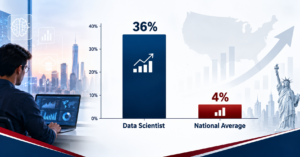
| Data Scientists | ~36% (much faster than average) | ~$112,590 |
| Computer & Information Research Scientists (includes AI/ML research roles) | ~19–26% | ~$141,000 |
| Database Administrators & Architects | ~9% | ~$104,000–$136,000 |
| Operations Research Analysts | ~23% | ~$83,640 |
(Figures are BLS national averages and vary by state, experience level, and industry. Always confirm the latest figures directly on bls.gov.)
For context, the average growth rate across all U.S. occupations is around 4–5%. Data science alone is projected to grow roughly seven to eight times faster than that average, a strong signal that this isn’t a temporary boom.
Top Career Paths in AI and Data Science
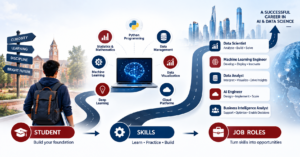
- Data Scientist
Data scientists clean, model, and analyze large datasets to uncover patterns and guide business decisions. They typically work with Python, R, SQL, and machine learning frameworks, then present findings through dashboards and visualizations. - Machine Learning Engineer
ML engineers take models built by data scientists and researchers and turn them into production-ready systems. This role blends software engineering with applied AI and is one of the highest-paying entry points into the field. - AI Research Scientist
Research scientists push the boundaries of what AI can do by developing new algorithms, improving model efficiency, and publishing findings. These roles typically require a master’s or PhD and are concentrated in research labs, universities, and large tech companies. - Data Analyst
Data analysts focus more on reporting and business intelligence than model-building. It’s a common entry point for people transitioning into data science from another field. - AI Product Manager
As companies integrate AI into products, they need people who understand both the technology and the business case for it. This hybrid role is growing quickly, especially in SaaS and consumer tech. - NLP Engineer / Computer Vision Engineer
Specialized ML roles focused on language (chatbots, translation, sentiment analysis) or vision (image recognition, autonomous systems) are increasingly common as AI applications become more specific to industry use cases.
Industries Hiring AI and Data Science Talent
- Healthcare diagnostic imaging, predictive analytics, drug discovery
- Finance fraud detection, algorithmic trading, credit risk modeling
- Retail & e-commerce recommendation systems, demand forecasting
- Government & Defense cybersecurity, logistics optimization
- Manufacturing predictive maintenance, supply chain analytics
- Entertainment & media content recommendation, audience analytics
Skills You Need to Build a Career in This Field
| Skill Category | Examples |
| Programming | Python, R, SQL |
| Math & Statistics | Probability, linear algebra, statistical inference |
| Machine Learning | Supervised/unsupervised learning, neural networks |
| Data Tools | Pandas, TensorFlow, PyTorch, Tableau, Power BI |
| Soft Skills | Communication, business acumen, problem-solving |
Formal education still matters; most roles expect at least a bachelor’s degree in computer science, statistics, or a related field, with research-focused roles often requiring a master’s or PhD. But the field also rewards demonstrated project experience: a strong portfolio, Kaggle competitions, or open-source contributions can open doors even without an advanced degree.
How to Start (or Pivot Into) a Career in AI and Data Science
- Learn the fundamentals: statistics, Python, and SQL are non-negotiable starting points.
- Get structured guidance; self-teaching works, but a structured curriculum helps you avoid gaps. This is where platforms like ED Global Academy, a global education platform, are useful; they offer guided learning paths, mentorship, and industry-relevant certifications for students and career changers who want a clear roadmap rather than a scattered one.
- Build real projects and apply your skills to real datasets, not just tutorials.
- Get certified credentials from recognized providers (or your university) to help you stand out to recruiters, especially early in your career.
- Network and apply strategically to target companies actively investing in AI, and tailor your resume to the specific role, not a generic “data” title.
Career Scope Beyond 2026: Is This Field Sustainable?
A common concern is whether AI will eventually replace the very professionals who build it. In reality, AI adoption tends to create more specialized roles rather than eliminate them; someone still has to design, train, audit, and maintain these systems responsibly. As AI becomes more embedded in regulated industries like healthcare and finance, new roles focused on AI governance, ethics, and auditing are also emerging, adding further career paths rather than shrinking existing ones.
Conclusion
The career scope of artificial intelligence and data science in the USA is not a passing trend; it’s a structural shift in how nearly every industry operates. With BLS projections showing growth rates several times the national average and salaries well above the median, this remains one of the strongest long-term career bets available today. Whether you’re a student mapping out your first degree or a professional considering a pivot, the path forward starts with the fundamentals: statistics, programming, and real project experience. Platforms like ED Global Academy can help structure that journey, but the most important step is simply starting. Explore your options, build a learning plan, and take the first course today.
FAQs
Q1. Is artificial intelligence and data science a good career in the USA?
Yes. BLS data shows data science and related computing roles growing significantly faster than the national average, with strong median salaries and consistent demand across industries.
Q2. Do I need a master’s degree to work in AI or data science?
Not always. Data analyst and many data scientist roles are accessible with a bachelor’s degree plus strong technical skills. Research-focused AI roles typically require a master’s or PhD.
Q3. What is the average salary for a data scientist in the USA?
According to BLS data, the median annual salary for data scientists is approximately $112,000–$120,000, though this varies by location, industry, and experience.
Q4. What programming languages should I learn for data science?
Python and SQL are essential. R is also widely used, particularly in academic and statistical research settings.
Q5. Can I switch careers into data science without a technical background?
Yes, many professionals successfully transition from finance, marketing, or engineering backgrounds by building foundational skills through structured courses and hands-on projects.
