
If you’ve spent any time searching for honorary doctorate programs, you’ve probably noticed two very different types of results. On one side, you’ll find universities describing a formal, merit-based nomination process. On the other hand, you’ll find platforms promising an honorary PhD online or an online honorary doctorate in a matter of weeks, with little more than a form and a fee.
So which one is real? The honest answer is both exist, but they are not the same thing, and understanding the difference is the actual key to getting an honorary doctorate “without the hassle.” The hassle isn’t the paperwork. It’s figuring out which path leads to genuine recognition and which one could put your credibility at risk.
This guide walks through how the legitimate process works, what to watch for, and how to make a smart, low-friction decision either way.
What an Honorary Doctorate Actually Is
An honorary doctorate is a title awarded by a university or academic institution to recognize a person’s real-world achievements, leadership, or contribution to society. It is not an academic qualification. You don’t earn it through coursework, exams, or a dissertation; you receive it as a form of tribute.
Because it isn’t earned academically, it can’t be used to claim professional credentials (for example, calling yourself a licensed doctor, professor, or researcher based on the title alone).
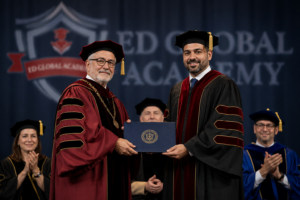
Honorary Doctorate vs. Earned Doctorate
| Feature | Honorary Doctorate | Earned Doctorate (PhD) |
| Basis | Life achievement, leadership, service | Years of research and coursework |
| Time required | Awarded as a ceremony | 3–6+ years typically |
| Academic credential | No | Yes |
| Can be used professionally | No (as a title of respect only) | Yes |
| Typical cost | Varies genuine cases are free | Tuition-based |
Why “Without the Hassle” Is a Loaded Phrase
When people search for a hassle-free honorary doctorate, they’re usually hoping to skip two things: a long nomination process and any uncertainty about who’s allowed to award one.
Here’s the reality:
- Traditional university-awarded honorary doctorates are prestigious precisely because they’re selective. A dean, alumni board, or nomination committee reviews a candidate’s record before a degree is even proposed. This process can take months, and it isn’t something you apply for directly; you’re typically nominated by someone within or connected to the institution.
- Private academies and recognition platforms, including newer entrants like ED Global Academy, have built faster, more accessible nomination pathways aimed at professionals, entrepreneurs, and community leaders who may not have ties to a traditional university. These programs can genuinely simplify the process, but “faster” and “accredited academic recognition” are not automatically the same thing.
The real hassle-saver isn’t finding a shortcut. It’s knowing what questions to ask before you commit your name, time, or money to any program.

How to Evaluate Any Honorary Doctorate Program
Before pursuing an online honorary doctorate or honorary PhD online, run through this checklist:
1. Who is issuing it?
Look up the issuing body directly. Is it a recognized, accredited university, or an independent academy/platform operating outside formal accreditation systems? Both can offer legitimate recognition, but they carry different weight, and you should know which one you’re getting.
2. What is the actual process?
A credible program, traditional or independent, should be able to explain clearly the following:
- Who nominates candidates
- What criteria are used (leadership, service, innovation, etc.)
- Whether there’s a review or vetting stage
- Any fees involved and what they cover
3. Is there a fee, and what is it for?
In fully traditional university settings, the honor itself is typically free; the institution is choosing to recognize you. Independent academies often charge a fee to cover ceremony costs, administration, or program participation. That’s not automatically a red flag, but it’s a meaningful difference worth understanding upfront.
4. Can you use the title afterward?
Ask directly whether the title is meant for personal and professional recognition (LinkedIn bio, speaking engagements, and networking) versus implying an academic qualification. Reputable programs will be upfront that it’s the former.
5. Does it match your actual goals?
If your goal is career recognition, networking, or public acknowledgment of your work, an honorary doctorate through a university or a dedicated recognition platform can genuinely help. If your goal is a professional or academic qualification, you need an earned doctorate instead.
What Platforms Like ED Global Academy Offer
ED Global Academy is one example of a growing category: global education platforms that run structured honorary doctorate and professorship nomination programs for professionals, entrepreneurs, and social contributors who may not have a direct route into traditional university nomination circles. These platforms typically outline eligibility criteria across fields like business, humanitarian work, the arts, and innovation and walk candidates through a defined nomination and review process.
If you’re considering a program like this, treat it the same way you’d treat any professional investment: read the eligibility criteria carefully, ask how the review process works, and confirm exactly what you’re receiving and how it can be represented once awarded.
A Realistic Step-by-Step Path
- Clarify your goal. Recognition and networking, or academic credential? This determines which path you need.
- Research your options. Compare traditional university nomination routes with independent academy programs.
- Check eligibility criteria. Most programs look for demonstrated leadership, service, innovation, or impact in your field.
- Prepare your case. A clear record of your achievements, press coverage, testimonials, and measurable impact strengthens any nomination.
- Ask direct questions. Cost, process, criteria, and how the title can be used.
- Make an informed decision. Choose the path that matches your actual goals and comfort with the process.
Conclusion
Getting an honorary doctorate “without the hassle” doesn’t mean skipping the process; it means understanding it clearly enough that you’re not guessing. Whether you pursue a traditional university nomination or a structured program through a global education platform like ED Global Academy, the same principles apply: know who’s awarding it, understand the criteria, ask about fees upfront, and be clear on how the title can be used once you have it.
Done right, an honorary doctorate can be a meaningful, low-friction way to have your work recognized. The hassle only shows up when you skip the homework.
FAQs
What is an honorary doctorate?
It’s a title awarded by a university or academic institution to recognize significant real-world achievement, leadership, or service, not an earned academic credential.
Can I use “Dr.” after receiving an honorary doctorate?
Some recipients do use it socially or professionally as a title of respect, but it should not be presented as an earned academic or professional qualification.
Is an honorary PhD online legitimate?
It depends entirely on the issuing institution or platform. Research the organization, its criteria, and its process before assuming legitimacy either way.
How long does the honorary doctorate process take?
Traditional university routes can take months due to nomination and committee review. Independent academy programs are often faster but should still include a genuine review step.
Do you have to pay for an honorary doctorate?
In fully traditional academic settings, no, the institution awards it. Independent platforms may charge a program or ceremony fee, which should be disclosed clearly upfront.
