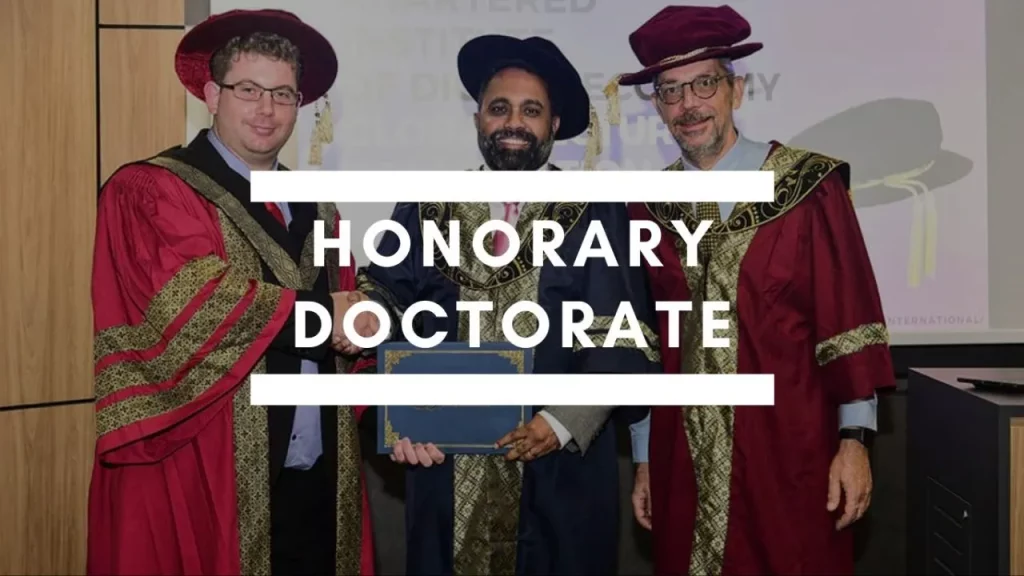
An honorary doctorate is an important recognition given to individuals who have made exceptional contributions in their field. Many professionals are curious about how to get an honorary doctorate and whether receiving such recognition from a respected Global education platform can truly improve their career.
The answer depends on how you use it. For some, it becomes a powerful personal branding For others, it strengthens authority, trust, and visibility in their industry.
What Is an Honorary Doctorate?
An honorary doctorate is a special award granted to recognize lifetime achievements. It is not earned through exams, research papers, or thesis submission.
It represents recognition of contribution — not academic qualification.
You can think of it as a lifetime achievement honor presented by a university or a Global education platform to acknowledge meaningful work in society.

Meaning and Purpose
The primary purpose of this award is recognition and respect.
It is typically given to individuals who have made significant contributions in areas such as:
Business and entrepreneurship – Helping people start and grow successful businesses.
Social development – Working to improve communities and the lives of people.
Education and leadership – Guiding and teaching others to achieve their goals.
Arts and culture – Creating or promoting art, music, literature, and cultural activities.
Innovation and technology – Developing new ideas, tools, or technologies to solve problems.
Public service – Serving society through government, charity, or community work.
For example:
- An entrepreneur who created employment opportunities
- A social leader who uplifted communities
- A public speaker who inspired thousands
- A policymaker who influenced positive change
Institutions use this recognition to connect academic values with real-world excellence.
How It Is Different from a Regular PhD
A traditional PhD requires:
- Years of structured study
- Academic research
- Examinations
- Thesis submission
An honorary doctorate does not involve these academic requirements.
It recognizes achievements and influence instead of academic performance. However, the value of the award depends largely on the reputation of the institution granting it.
How to Get an Honorary Doctorate
Many professionals actively search online for how to get an honorary doctorate. The process is generally based on nomination and evaluation rather than direct enrollment.
Eligibility Criteria
Institutions usually consider:
- Outstanding professional achievements
- Leadership experience
- Social or community impact
- Public recognition
- Ethical reputation
- Industry influence
Real contribution matters more than formal qualifications.
Nomination Process
The common process includes:
- Nomination by a committee or academic representative
- Review of achievements and public impact
- Approval by a governing board
- Formal presentation during a ceremony
Some institutions may review professional portfolios and documentation before making a final decision.
Ways to Strengthen Your Profile
To increase your chances:
- Build a strong professional reputation
- Contribute meaningfully to society
- Speak at conferences and public events
- Publish articles or thought leadership content
- Gain media recognition
- Maintain ethical conduct
Recognition is earned through consistent impact.

Career Impact of an Honorary Doctorate
Professional Recognition
Using the title “Dr.” (where legally allowed) can enhance authority in fields such as:
- Consulting
- Public speaking
- Coaching
- Entrepreneurship
- Executive leadership
It often improves perception and strengthens professional positioning.
Career Growth Opportunities
Such recognition may lead to:
- Advisory roles
- Board memberships
- Speaking engagements
- International collaborations
- Institutional partnerships
Greater visibility can create new opportunities.
Increased Credibility
Trust plays a major role in career success. An honorary doctorate can strengthen personal branding and public image — but consistent performance must support it.
Resume and Branding Benefits
Resume Value
Including this recognition on your resume can reflect:
- Authority
- Industry respect
- Leadership recognition
- Social contribution
It should always be clearly mentioned as honorary to maintain transparency.
Digital Presence
On professional platforms like LinkedIn, it can:
- Increase engagement
- Strengthen credibility
- Attract collaboration opportunities
In today’s digital world, strong branding influences growth.
Challenges and Limitations
- It does not replace formal academic degrees
- Some industries may not value it equally
- Misuse of the title can harm credibility
- The impact depends on the awarding institution’s reputation
Careful verification of authenticity is always important.
Is It Worth It?
If awarded by a reputable institution, it can enhance:
- Professional credibility
- Authority
- Public image
- Networking opportunities
However, it is not a shortcut to success. Real achievement remains the true foundation of long-term career growth.
How Ed Global Academy Recognizes Excellence and Impact
Ed Global Academy honors people who have done great work in their fields. Whether in business, social work, education, or arts, the academy celebrates real achievements that make a difference.
Conclusion
Receiving an honorary doctorate is a recognition of your real-world achievements, leadership, and contribution to society. It is not about exams or academic study, but about the positive impact you have created in your field. When awarded by a trusted institution, it can enhance your professional image and open new opportunities.
Most importantly, long-term success does not come from a title alone. Your experience, integrity, and continued contribution are what truly build credibility. Recognition from a respected Global education platform can strengthen your profile, but your actions and achievements will always matter the most.
