
Doctorates represent the highest level of academic achievement, but not all doctorates are created equal. An earned doctorate requires years of rigorous study, original research, and dissertation defense, while an honorary doctorate is awarded for exceptional contributions to society without formal academic requirements. This article will examine the differences between these two types of doctorates, their purposes, recognition standards, and which one carries more weight in academic and professional settings.
What Is an Earned Doctorate?
An earned doctorate is the highest academic degree you can obtain through formal education. It requires completing extensive coursework, conducting original research, and defending your findings before a committee of experts.
Key characteristics include:
- 4-8 years of intensive study beyond bachelor’s degree
- Original research that contributes new knowledge to your field
- Comprehensive examinations
- Dissertation or thesis writing
- Public defense of research findings
- Supervision by experienced faculty advisors
Common types of earned doctorates include PhD (Doctor of Philosophy), EdD (Doctor of Education), DBA (Doctor of Business Administration), and professional doctorates in medicine, law, or psychology.
The journey demands significant commitment, intellectual rigor, and perseverance. Students must master existing knowledge in their field while creating new insights through independent research.
Many institutions now offer online doctorate programs that provide flexibility for working professionals, though the academic standards remain equally rigorous as traditional campus-based programs.
What Is an Honorary Doctorate?
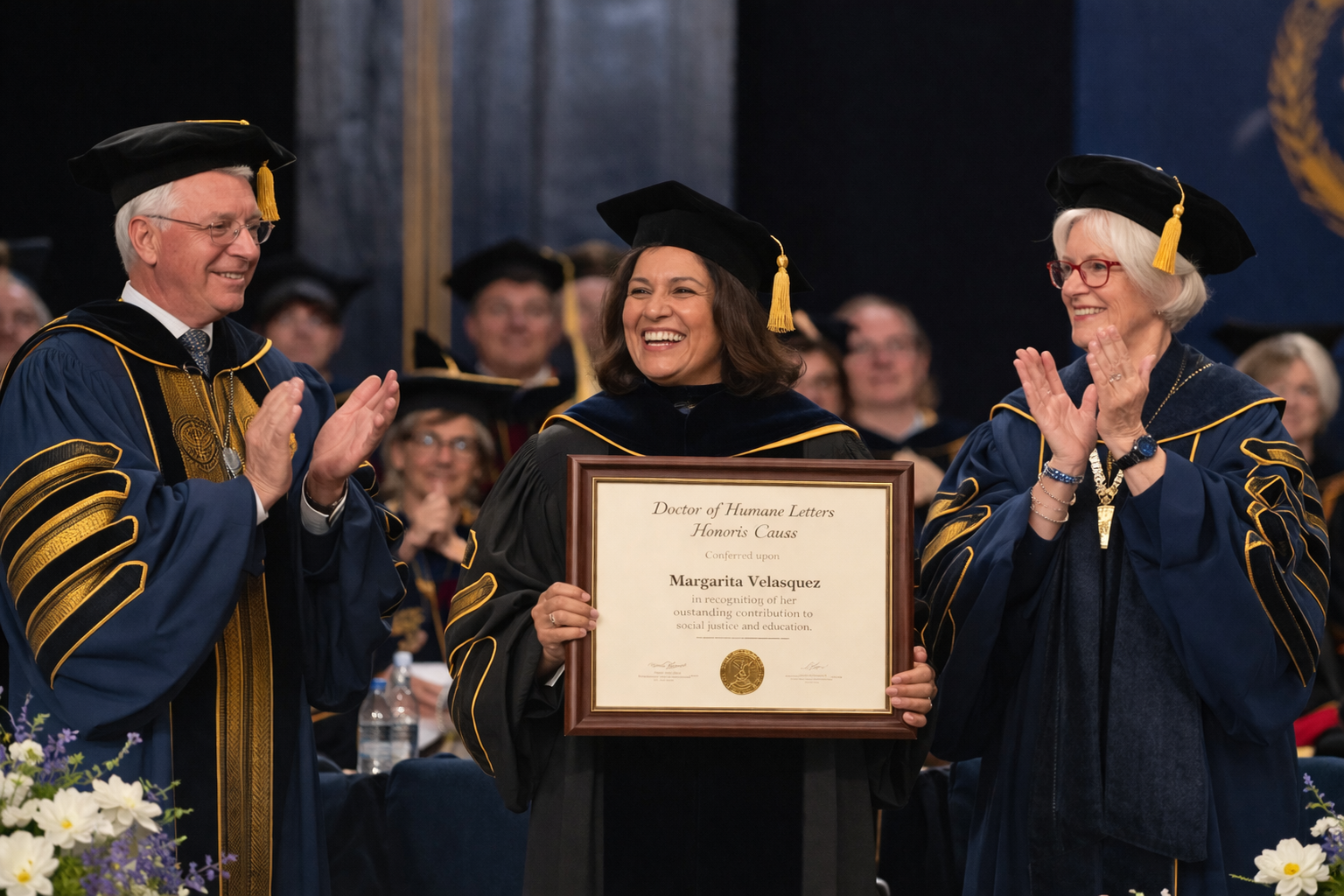
An honorary doctorate is a recognition award given by universities to individuals who have made outstanding contributions to society, culture, science, or humanity. It does not require any coursework, examinations, or research.
Distinctive features:
- Awarded for exceptional achievements or contributions
- No academic requirements or studies needed
- Ceremonial recognition rather than an educational credential
- Recipients typically cannot use the “Dr.” title in professional contexts
- Given during graduation ceremonies or special events
- Based on nomination and university board approval
Universities grant honorary doctorates to distinguished leaders, philanthropists, artists, scientists, activists, or public figures whose work aligns with institutional values.
Recipients receive the same robes and ceremony as earned doctorate graduates, but the degree serves purely as symbolic recognition rather than academic qualification.
This tradition dates back centuries as a way for universities to honor exceptional individuals and associate themselves with notable achievements.
How Do These Two Doctorates Differ Fundamentally?
The differences between honorary and earned doctorates extend far beyond the names. Understanding these distinctions helps clarify their respective purposes and value.
Educational Requirements
Earned doctorates demand years of formal education, coursework completion, and mastery of complex subject matter. Honorary doctorates require no educational prerequisites whatsoever.
Research and Scholarship
Earned doctorate holders must conduct original research, contribute new knowledge, and advance their academic field. Honorary recipients are recognized for existing accomplishments outside traditional academic research.
Assessment and Evaluation
Earned doctorates involve rigorous examinations, peer review, dissertation defense, and continuous evaluation throughout the program. Honorary awards have no testing or academic assessment.
Professional Recognition
Earned doctorate graduates can legitimately use the “Dr.” title in professional and academic settings. Honorary doctorate recipients generally cannot use this title, as it would misrepresent their qualifications.
Time Investment
Pursuing an earned doctorate typically takes 4-8 years of dedicated full-time or part-time study. Receiving an honorary doctorate happens during a single ceremony without any time investment.
Purpose and Intent
Earned doctorates certify expertise and qualification in a specific field. Honorary doctorates celebrate achievements and create goodwill between universities and distinguished individuals.
Which Doctorate Holds More Academic Value?
From an academic and professional perspective, earned doctorates carry significantly more value than honorary degrees.
Earned doctorates demonstrate:
- Proven expertise in a specialized field
- Ability to conduct independent research
- Critical thinking and analytical skills
- Commitment to advancing knowledge
- Qualifications to teach at the university level
- Credibility in professional and academic circles
Academic institutions, employers, and professional organizations recognize earned doctorates as legitimate credentials that qualify holders for specific roles and responsibilities.
Honorary degrees, while prestigious as personal honors, do not qualify recipients for academic positions, research roles, or professional licenses that require doctoral-level education.
Universities explicitly distinguish between these categories. Academic records, faculty directories, and official communications separate earned and honorary degree holders clearly.
However, honorary doctorates hold immense symbolic and social value. They represent recognition from respected institutions and acknowledge contributions that may surpass traditional academic achievements in societal impact.
When Does Each Type of Doctorate Matter Most?
Each type of doctorate matters most depending on your career goals. A PhD is ideal for research and academic careers, while a DBA suits professionals aiming for leadership roles in business. focusing on practical skills and real-world impact.
Situations Where Earned Doctorates Matter
Academic Employment: Universities require earned doctorates for tenure-track faculty positions.
Research Positions: Scientific institutions, laboratories, and research organizations need documented research expertise.
Professional Licensing: Medical doctors, clinical psychologists, and other licensed professionals must hold specific earned doctoral degrees.
Credibility in Technical Fields: Publishing research, presenting at conferences, or consulting in specialized areas.
Situations Where Honorary Doctorates Matter
Public Recognition: Ceremonial events celebrating lifetime achievements or contributions to society value honorary degrees appropriately.
Symbolic Association: Universities benefit from associating with distinguished honorees, enhancing institutional prestige and visibility.
Philanthropic Relationships: Honorary degrees often recognize major donors or individuals who support educational missions significantly.
Cultural Validation: Artists, activists, or public figures receive validation for work that may not fit traditional academic frameworks.
Can You Pursue Both Types of Doctorates?
Yes, some individuals hold both earned and honorary doctorates. Accomplished academics sometimes receive honorary degrees from multiple institutions recognizing their research contributions.
The combination typically follows this pattern:
- First, the individual earns a legitimate doctorate through years of study
- Later, as their careers flourish, universities award honorary doctorates recognizing accumulated achievements
- The honorary degrees complement rather than replace the earned credentials
Many online doctorate programs enable working professionals to earn legitimate doctoral degrees while maintaining careers, making earned doctorates more accessible than ever before.
Distinguished professors, groundbreaking researchers, and influential thought leaders often accumulate multiple honorary doctorates throughout their careers while holding one or two earned doctorates.
Recipients always clearly distinguish between their earned and honorary credentials in professional contexts to maintain transparency and integrity.
How Should You Present These Credentials?
Present your credentials in a clear, concise, and professional manner that highlights your strengths. Start with the most relevant qualifications, certifications, or achievements, and organize them in a logical order. Use simple language, keep it easy to read, and focus on what adds value to your profile or purpose. Tailor your presentation based on your audience to make the strongest impact.
For Earned Doctorates:
- Use “Dr.” before your name or relevant post-nominal letters (PhD, EdD, etc.)
- List the degree, institution, and year on resumes and professional profiles
- Reference your dissertation topic when relevant
- Highlight research contributions and publications
For Honorary Doctorates:
- List separately from academic credentials
- Label clearly as “Honorary” degree
- Avoid using the “Dr.” title based solely on an honorary award
- Mention in biography sections rather than qualification lists
- Acknowledge the honoring institution and reason for recognition
Misrepresenting honorary degrees as earned credentials damages credibility and violates ethical standards in most professional fields.
Key Takeaways
- Earned doctorates require years of rigorous study, original research, and formal academic achievement, while honorary doctorates recognize exceptional contributions without educational requirements
- Earned doctorates hold substantially more academic and professional value, qualifying holders for teaching, research positions, and specialized careers
- Honorary doctorates carry significant symbolic and social value as recognition awards from prestigious institutions
- Recipients of earned doctorates can legitimately use the “Dr.” title, whereas honorary degree holders generally cannot
- Both types serve distinct purposes: earned doctorates certify expertise and qualification, while honorary degrees celebrate achievements and societal contributions
- Proper presentation of credentials requires clearly distinguishing between earned and honorary degrees to maintain professional integrit
Conclusion
The comparison between honorary and earned doctorates reveals two fundamentally different credentials serving distinct purposes. Earned doctorates represent the pinnacle of academic achievement, requiring years of dedication, research, and intellectual contribution. They qualify holders for specialized careers and command respect across professional and academic communities. Honorary doctorates, while prestigious as symbolic recognition, do not substitute for earned credentials and carry value primarily as ceremonial honors. For anyone seeking genuine expertise, career advancement, or academic qualification, pursuing an earned doctorate remains essential. Understanding these differences helps you make informed decisions about educational goals and properly evaluate credentials in professional contexts.
FAQs
Q1: Can someone with an honorary doctorate call themselves “Doctor”?
Generally no. Honorary doctorate recipients should not use the “Dr.” title professionally, as it misrepresents their qualifications. The title is reserved for those who earned doctorates through formal academic programs.
Q2: Do employers recognize honorary doctorates as legitimate qualifications?
No. Employers seeking doctoral-level qualifications require earned doctorates. Honorary degrees are not considered educational credentials for employment purposes and do not qualify candidates for positions requiring doctoral expertise.
Q3: How long does it take to earn a legitimate doctorate?
Most earned doctorates take 4-8 years beyond a bachelor’s degree, depending on the field, program structure, research complexity, and whether you study full-time or part-time.
Q4: Can you get an earned doctorate through distance learning?
Yes. Many accredited universities offer rigorous doctoral programs through distance education, maintaining the same academic standards as campus-based programs while providing flexibility for working professionals.
Q5: Who decides who receives an honorary doctorate?
University boards, committees, or academic senates nominate and approve honorary doctorate recipients based on their achievements, contributions, and alignment with institutional values and missions.
Q6: Is it possible to have an honorary doctorate revoked?
Yes. Universities can revoke honorary degrees if recipients engage in conduct that contradicts institutional values or if serious ethical violations come to light after the award.
