
An online master’s in cyber security degree can help working professionals gain advanced knowledge without leaving their jobs. It gives flexibility, career value, and access to current security concepts that matter across industries. For many students, the main challenge is not admission or coursework. The real task is managing job duties, study time, and personal life steadily.
What Is an Online Master’s in Cyber Security?
An online master’s degree in cybersecurity is a postgraduate program focused on digital protection, risk control, network defence, and data security. It is delivered through virtual classes, recorded lectures, discussion boards, and project-based learning. Students study from home or any suitable place with internet access. This format helps professionals continue earning while building higher qualifications. It also suits learners who need flexibility without losing academic depth.
The course usually covers both technical and strategic topics. Students learn how security issues affect companies, public systems, and personal data.
Common areas of study include:
- network security
- ethical hacking basics
- cloud security
- digital forensics
- incident response
- information security policy
- risk assessment and compliance
Many programs also include practical assignments, lab work, and case studies. This helps students connect theory with real workplace problems. A good program does not only teach tools. It also develops critical thinking and decision-making for security roles.
For students exploring a trusted Global Education Platform, this degree can be a strong academic route with clear career relevance.
Why Working Professionals Choose an Online Cyber Security Master’s Degree
Working professionals often prefer an online format because it gives more control over time and routine. They do not need to pause their careers or move to another city. This makes higher education more realistic for people with office commitments, family duties, or financial responsibilities. The online model also helps students study at a pace that fits their weekly schedule. As a result, learning becomes more manageable and sustainable.
Cybersecurity is a strong field for career growth. Companies across finance, healthcare, retail, education, and IT need trained security professionals. Because of this, many employees see a master’s degree as a practical step for long-term growth.
Key reasons professionals enroll include:
- Career advancement
A higher degree can improve chances for senior roles in security operations, governance, risk, and compliance. - Skill improvement
Students gain deeper knowledge in threat analysis, security planning, and system protection. - Flexibility
Online study fits around office hours better than a campus-based degree. - Industry relevance
Programs often include modern topics such as cloud security, zero-trust ideas, and cyber risk management. - Income continuity
Students can keep their salary while studying.
This path also gives confidence to professionals who want a shift from general IT into a dedicated security role. Some learners come from networking, software, or system administration and use the degree to move into cybersecurity leadership. Ed Global Academy are often explored by students who want flexible study options with career-focused learning.
How to Balance a Full-Time Job and an Online Master’s in Cyber Security
Balancing office work and higher studies needs planning, discipline, and realistic expectations. Most students do not struggle because the course is impossible. The issue usually comes from poor routine design, low energy management, or irregular study habits. A balanced system works better than a last-minute effort. Little daily progress often gives better results than long weekend study sessions.
The first step is to accept that time is limited. After that, students can build a routine that protects both work performance and academic progress. It is useful to divide tasks into smaller blocks and set weekly goals.
A practical balance plan can include:
- Fixed study hours on weekdays
- One longer revision block on weekends
- short breaks to avoid mental fatigue
- simple to-do lists for each course module
- clear priority order for office tasks and study tasks
Communication also matters. If possible, tell family members about study hours so interruptions stay low. Some students also inform managers about exam periods or project deadlines, especially if the office workload is heavy. This can reduce stress and help with realistic planning.
Another useful habit is energy tracking. Many professionals are tired after office hours. In such cases, early morning study may work better than late-night sessions. Students should identify the part of the day where focus is strongest.
Here is a simple balance model:
| Area | Practical approach | Benefit |
| Work tasks | Plan office goals at the start of each day | Reduces overlap with study time |
| Study tasks | Break modules into smaller targets | Makes progress easier to track |
| Health | Sleep well, eat on time, and take short walks | Improves focus and memory |
| Family life | Share the study schedule clearly | Cuts confusion and stress |
Consistency matters more than perfection. Missing one session is not a crisis. The key is returning to the plan quickly.
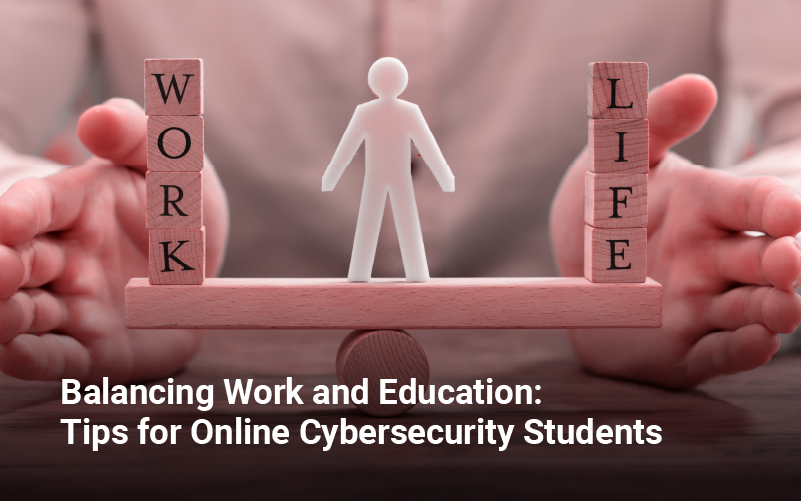
Best Time Management Strategies for Cyber Security Students Who Work Full-Time
Time management is the core skill for success in an online course. Students with jobs often have enough ability and motivation, but weak time control can create pressure. Good planning reduces panic, improves assignment quality, and keeps learning steady. It also protects mental well-being. A practical system should be simple enough to follow every week.
One effective method is time blocking. In this method, students assign fixed slots for reading, lectures, revision, and assignments. This avoids confusion and reduces decision fatigue.
Useful strategies include:
1. Use a weekly study calendar
Write down lecture hours, deadlines, office meetings, and revision sessions in one place. A digital calendar or notebook can both work.
2. Set three academic priorities each week
Do not overload your plan. Focus on the three most important course tasks first.
3. Use the 45–15 method
Study for 45 minutes, then take a 15-minute break. This can improve concentration during difficult topics.
4. Prepare for deadlines early
Start assignments several days before the final date. Early progress lowers stress and gives room for correction.
5. Reduce low-value screen time
Many working students lose study hours to scrolling and random video watching. Limiting that time creates more space for coursework.
6. Review progress every Sunday
A short weekly review helps identify unfinished tasks and plan the next week with clarity.
These strategies work best if they become habits. A simple plan followed every week is more effective than a perfect plan used only once.
How to Create a Study Schedule That Fits Around Your Job
A study schedule should match real life, not an ideal version of real life. Many students fail because they make unrealistic plans that ignore office travel, family duties, tiredness, or urgent work tasks. A useful schedule is flexible, clear, and practical. It should include learning time, revision time, and rest time. It should also leave small buffer slots for unexpected changes.
Start by checking how many hours you can truly give each week. After that, divide those hours across the program requirements.
A simple process can help:
- List fixed commitments
Add office hours, commute, meals, sleep, and family duties. - Mark free study windows
Look for early mornings, lunch breaks, evenings, or weekend slots. - Assign task types to each slot
Use short slots for reading or notes. Use longer slots for assignments or projects. - Keep one backup slot
A spare block each week can save your plan if work pressure increases. - Track results for two weeks
Check if the schedule feels realistic. Adjust based on actual performance.
Example schedule:
- Monday to Friday: 1 to 1.5 hours per day
- Saturday: 3 hours for projects and revision
- Sunday: 1 hour for planning and light review
This kind of routine can suit many professionals. The exact plan may vary, but the basic idea remains the same: a realistic structure helps long-term consistency.
What Skills Can You Build While Completing an Online Cyber Security Master’s
An advanced degree in cybersecurity builds more than technical knowledge. It also improves analytical thinking, communication, and risk-based decision-making. These abilities matter across modern workplaces. Students learn to solve problems, review systems, and understand how digital threats affect business operations. This makes the degree valuable for both technical and managerial paths.
Technical skills often include:
- security analysis
- threat detection
- network protection
- access control basics
- cloud risk awareness
- incident handling
- security auditing
Non-technical skills also grow during the program:
- time management
- report writing
- problem-solving
- research ability
- policy understanding
- team communication
These skills are useful for roles such as security analyst, SOC team member, compliance specialist, risk analyst, or IT auditor. An Online Master’s in Cyber Security also helps students build discipline through independent learning. That habit is valuable in cybersecurity because the field changes fast, and regular learning stays important.
Common Challenges Working Professionals Face and How to Overcome Them
Working professionals often face similar barriers during online study. These issues are common and manageable with the right plan. The biggest problem is usually overload, not lack of ability. Career pressure, mental fatigue, and weak routine design can create setbacks. Good systems reduce these problems before they grow.
Common challenges include:
- lack of daily energy
- missed deadlines
- inconsistent study routine
- family interruptions
- difficulty understanding advanced topics
- stress during exams or project submissions
Ways to handle them:
- Study during your highest-focus hours
- Ask faculty or peers for help early
- Split large assignments into smaller parts
- Avoid multitasking during study sessions
- Use revision notes for complex modules
- Protect sleep, as poor rest weakens memory and focus
Peer groups can also help. Discussion forums, class communities, or study partners often make learning easier. Students gain accountability and quicker doubt resolution.
How an Online Master’s in Cyber Security Can Support Career Growth
This degree can improve career growth by combining academic depth with practical relevance. It helps professionals move beyond entry-level technical work and build stronger profiles for advanced roles. Employers often value candidates who understand both security systems and business risk. A postgraduate qualification can also help during role changes, internal promotions, or salary discussions.
Career benefits may include:
- Access to higher-level job roles
- A better understanding of enterprise security
- Improved confidence in technical discussions
- Stronger profile for leadership tracks
- Broader knowledge of compliance and governance
For students aiming to grow through a Global Education Platform, this degree can serve as a credible step toward long-term career progress. An Online Master’s in Cyber Security is especially useful for professionals who want structured growth without leaving full-time employment.
Conclusion
Completing an online cybersecurity degree while working full-time is possible with discipline, planning, and realistic routines. Students who manage time well, build a practical study schedule, and stay consistent can handle both professional and academic goals. A reliable Global Education Platform can make this path more accessible, but personal routine and commitment remain the real drivers of success. Keep the plan simple, protect your health, and move forward one week at a time.
FAQ’s
1. Is an online cybersecurity master’s degree suitable for working professionals?
Yes. The flexible format allows students to continue their jobs while completing advanced education in a structured way.
2. How many hours should a working student study each week?
Many professionals aim for 8 to 12 hours per week, based on course load, job pressure, and personal routine.
3. Can this degree help in career growth?
Yes. It can improve technical depth, strengthen your profile for advanced roles, and increase readiness for leadership or specialist positions.
4. What is the biggest challenge for full-time employees in online study?
Time control and energy management are usually the biggest challenges. A realistic schedule can reduce both issues.
5. What skills does an Online Master’s in cybersecurity develop?
It builds technical security knowledge along with analysis, reporting, problem-solving, and time management skills.
